
§ 4 · The name
In 1906 a doctor described the disease in one woman. In 2019 doctors described a woman who should have had it, and did not.
 No photograph of her is free to publish. In its place, the mark that carries her name.
- 1906
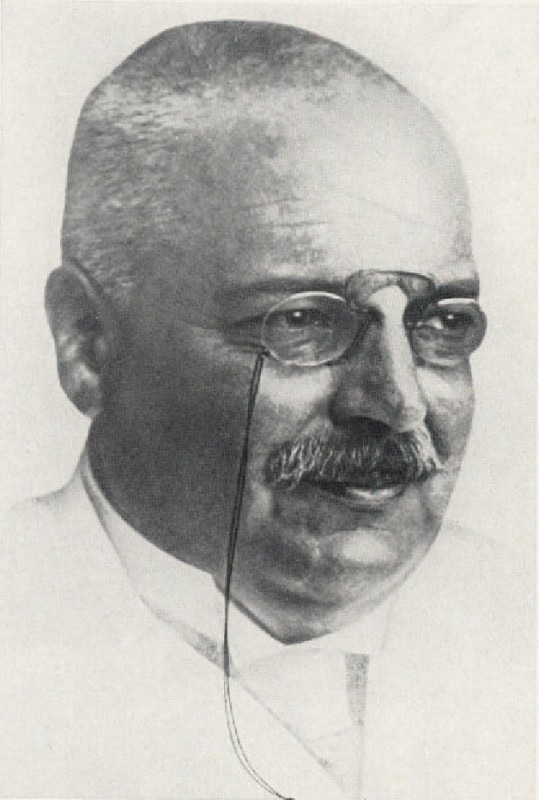
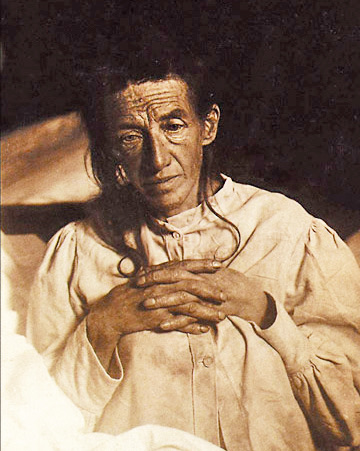
Alois Alzheimer describes a new disease of the brain, in a lecture in Tübingen. His patient, Auguste Deter, was admitted to the Frankfurt asylum at 51 and died that April. The disease takes his name.
- 1987
In Antioquia, Colombia, the neurologist Francisco Lopera begins publishing on families in which the disease comes in middle age, generation after generation.
- 1995
The cause is found: one change in the gene PSEN1, the “Paisa” mutation. About 1,200 people carry it. In carriers memory starts to fail at about 44, and dementia follows at about 49.
- 2019
A case report in Nature Medicine: a woman of the family who carries the mutation and stayed clear into her seventies. Her brain holds more amyloid plaque than her relatives who were already failing, yet tau has barely spread. She carries two copies of a rare form of APOE, called Christchurch. The disease was there. It did not take hold.
- 2020
Her name is made public after her death, at 77: Aliria Rosa Piedrahita de Villegas.
- 2023
A second exception in the same family: a man with the mutation who stayed clear until 67, protected by a rare change in another gene, RELN. Two people, two different shields.
- Now
aliria asks the same question of everyone else. In brain tissue from hundreds of donors, read one cell at a time, which genes in which cells go with the disease, and which go with the people whose brains held?
Sources: Arboleda-Velasquez et al., Nature Medicine, 2019 · NIH on the case · UC Santa Barbara, 2020 · Lopera et al., Nature Medicine, 2023. The token is Agent Aliria ($ALIRIA); it carries her story, not her likeness.